
MRUDANGA
Introduction Mridangam, also spelled mrdangam, mridanga, or mrdanga, Two headed drum played in Karnatak music of southern India. It is made of wood in an angular barrel shape, having an outline like an elongated hexagon. Thong hoops around each end …
Overview
Introduction
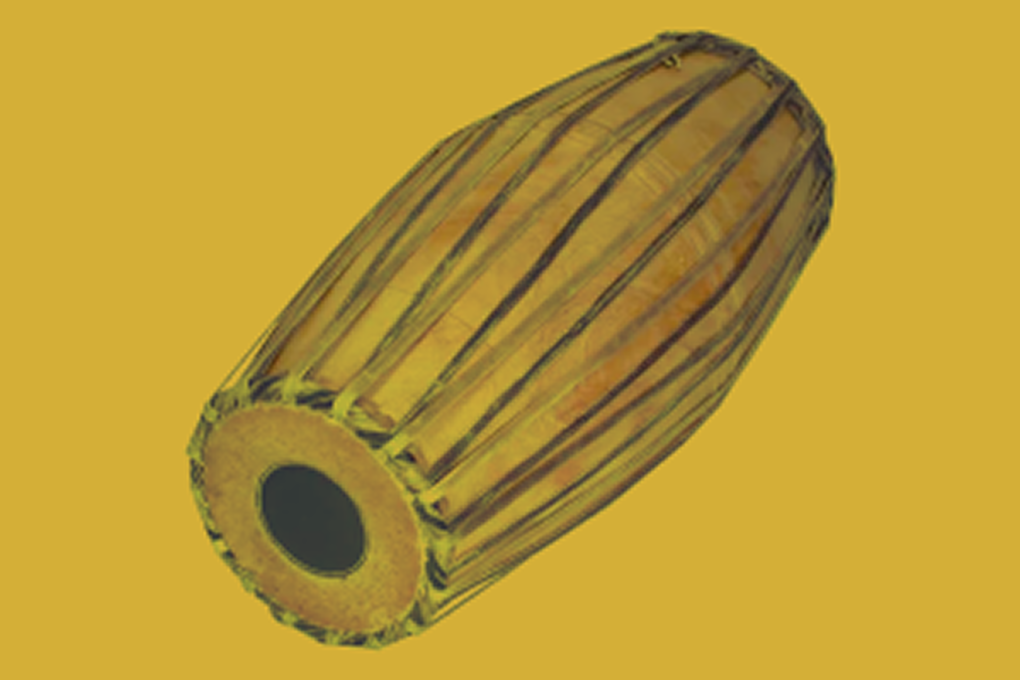
Mridangam, also spelled mrdangam, mridanga, or mrdanga, Two headed drum played in Karnatak music of southern India. It is made of wood in an angular barrel shape, having an outline like an elongated hexagon. Thong hoops around each end of the drum, leather thong lacing, and small wooden dowels slipped under the lacings control the skin tension.
The Indian Musical Instrument Mridangam is one of the most popular classical instruments of South India. Mridangam accompanies vocal, instrumental and dance performances. Mridangam is the main instrument that provides rhythm and raga to Carnatic music performances. It is also known by the name of mridanga, mrdangam, mrudangam and mrithangam. In Hindu mythology, mridanga /mridangam is shown often as the instrument of many popular deities such as Ganesha and Nandi vehicle or companion of Lord Shiva. Accordingly it is believed that Nandi played the mridangam during Shiva’s Tandava dance and due to these reasons mridangam is also known as “Deva Vaadyam,” (the instrument of the Gods).
Mridangam is made using hollow piece of jackfruit wood, which is an inch thick. The two sides of the drum are covered with leather which is tied to each other with leather around the circumference of the drum/mridangam. These leather straps of the drum are stretched to high tension on either side of the hull, which allows them to resonate when struck. An important note here is that the two membranes are different in width, which helps in production of both bass and treble sounds from the same drum. The “thoppi” or “eda bhaaga” is the bass aperture while the smaller aperture is known as the “valanthalai” or “bala bhaaga”. The smaller membrane of the mridanga, when struck with stick, produces high pitched sound and the wider aperture produces lower pitched sound.

Brief Explanation
The goat skin smaller aperture is smeared in the center part with a black round spot that is made of rice flour, starch and ferric oxide. This black paste is known as the “Satham” or “karnai” and which provides the mridangam its distinct metallic timbre. The present day mridangam is made of a single block of wood. It is a barrel-shaped double-headed drum, the right head being smaller than the left. The two heads are made of layers of skin. The mridangam is played with hands, palms and fingers. The mridangam is played from both sides. Mridangam is similar in appearance to the Pakhawaj but the ends have a different texture. It is the most used drum in South Indian music.
Curriculum
Instructor

You May Like

₹2,000.00₹1,500.00
Course Features
- Lecture 0
- Quiz 0
- Duration 45 - 60 mins
- Skill level All levels
- Language English
- Students 0
- Assessments Yes


